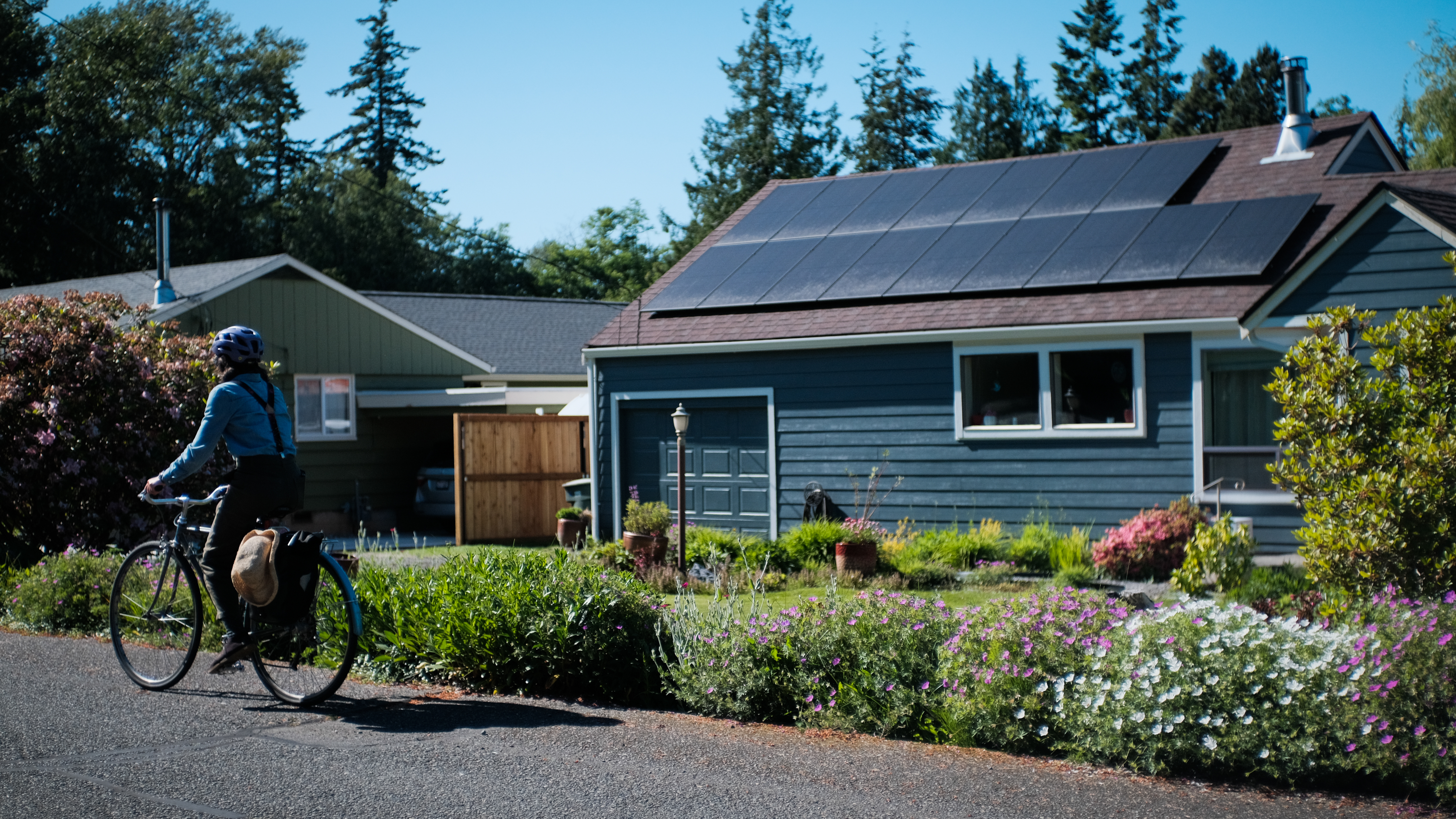
In May 2026, Regenerate Whatcom hosted a permaculture bike tour in the Birchwood neighborhood of Bellingham, WA. Seven gardens were visited in a flurry of spokes, steps, and sunshine. See the gallery directly here, or read on about how bikes, backyard stewardship, and communities can serve a role in connection and resilience on the human-scale.


This past Saturday, around 40 people converged at an unassuming home in the Birchwood neighborhood of Bellingham, in the Squalicum Creek water catchment. California poppies welcomed a mélange of neighbors, pedaling in on a spectrum of bicycle hues, a blend of shapes and sizes to match those in the saddle. Cargo, road, gravel, classic, mini, mountain, electric, cruisers—the means of conveyance were as bright as the flowering plants to be seen throughout the sunny afternoon.
“We found Bellingham to be a place where we could set roots, literally,” Julian Kapoor tells the group upon introduction. He was one of the day’s hosts, alongside David MacLeod, who was one of the original activators for Regenerate Whatcom. As we congregate, Julian continues to explain how Birchwood used to be a city hub for local gardens that brought food to community in the midst of both World Wars and the Great Depression. Now, in spite of such a history of “victory gardens,” the neighborhood is technically classified as food desert, with limited access to suitable grocery stores with fresh food.
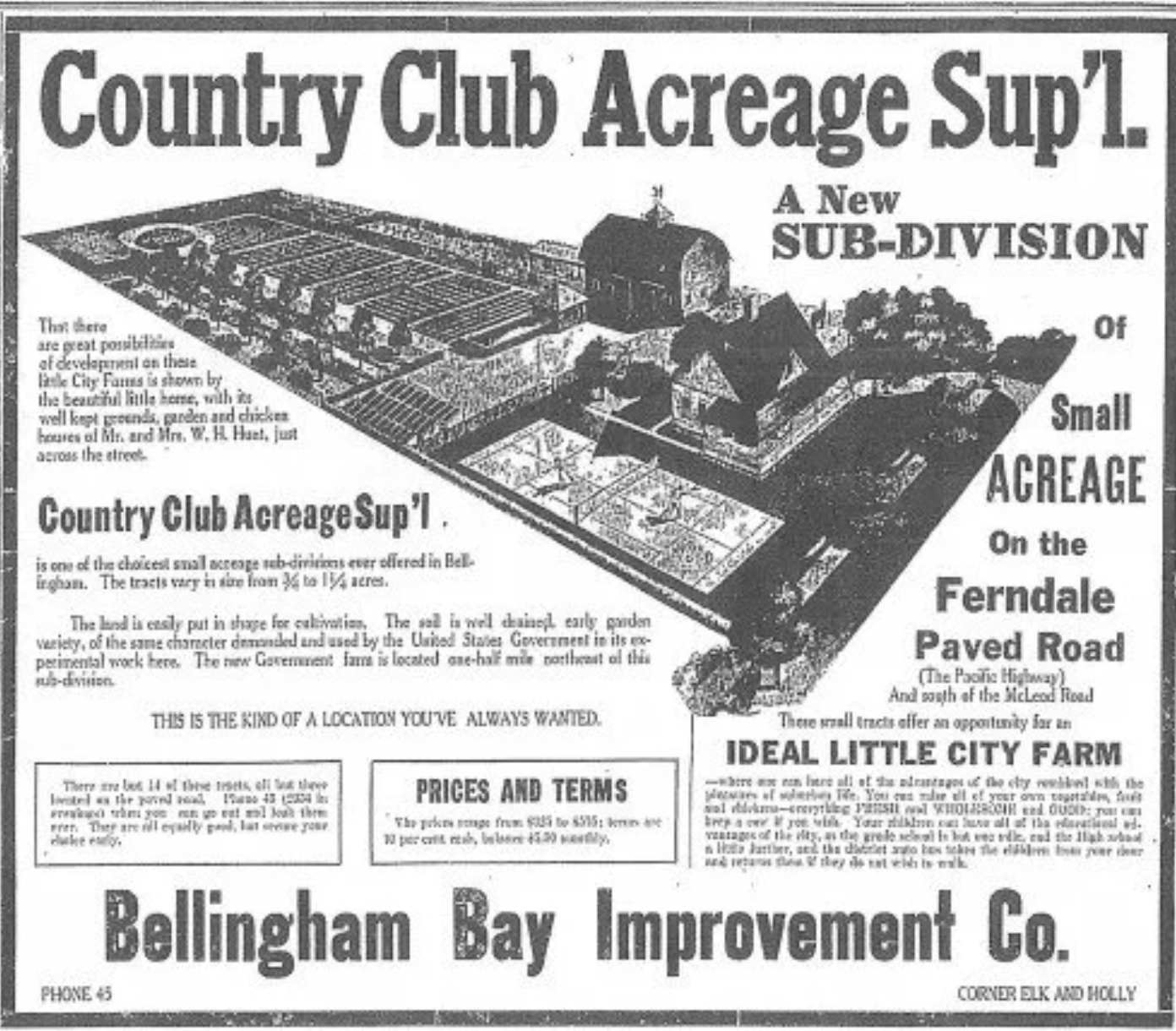


First Image: Birchwood Neighborhood
Our pedal strokes brought us leisurely between sites, each with a particular story to tell. “The bike provides the perfect pace with which to experience the world around,” my friend and academic mentor Charlie says. This felt true as we transitioned from busier streets to rolling lanes, linking up new gardens with car-free paths through a tunnel of lush greenery. The kaleidoscope of bikes was left at one home as we continued on foot, taking in the vibrancy of fresh blossoms, the shape of the land as it relates to the flow of water, and the proximity of many neighbors working individually toward the tapestry of a larger fabric. This is one of the goals of Regenerate Whatcom, to aid in the weaving and cooperation among those who have a similar care for place and people.

Surrounded by chatter, crouching, looking, inquiring–nary a phone in sight.
Those in attendance spanned birth dates across eight decades.
Laughs, discerning questions, deeper dives; forty people, all showing up.
In the midst of the light streaming through the abundance, an oft-repeated phrase came to mind: “gardening is a revolutionary act.” Hands in the soil, cultivating, creating the conditions for life from disorder. To wrestle back a connection to our land and food and water from the all too many hurdles and widgets and algorithms which stand in the way, and often to do so alongside neighbors. Of course, it is also an evolutionary act. We have been shaped alongside our practices, and at times the stark realization of what our current practices bring for our food and land can be sobering. In what ways are we evolving now, as it relates to our food? Our communities? I ask this with my own recognition of much of my own food sourced from the likes of Costco; events like these are ways that I can better understand what it actually takes to live in concert with, as opposed to extractively upon.
We all re-converged at our starting point to share a meal together, the abundance and color of the food again an analog of the brightness and care of those present. As we reflected on our shared afternoon, what came to mind for me was a sense of this being what living and feeling our way into solutions looks like.
Recently, another grand plan for an ecologically balanced, equitable, and thoughtful world was published. Such visions have their place, now more than ever, as guiding lights. Yet I fear our need for strategizing has at times spun our wheels to the point of losing sight of the (agro)forest for the trees. The tangible realities of implementing these ideas are far messier than prim, well-cited bullet points. What does the dance between idealized planning and boots on the ground, hands in the soil, actually look like?
We had 40 people on bikes or on foot, moving through the neighborhood scale, learning, demonstrating, and connecting. Some of the food at the potluck was sourced from the very gardens we had toured. We harvested sunlight on our faces as we pedaled between homes, conversing, laughing, and existing. It may not be a final solution to the cacophony of alarm bells we are constantly hearing, but it sure can be a starting point.
David MacLeod mentioned that it has been a bit of a slow start to gain traction on these fronts in our community. But like riding a bike, sometimes getting rolling is the hardest part. Then the phase shift has been set into motion.
And I hope to see you all in motion on a ride in the near future.


Wish to see more shots from the event? Follow this link to the event gallery.

Leave a Reply