Another climate headline, another drowning polar bear. We are surrounded by alarm bells, flashing lights, and infinite monkeys of environmental doom clanging on typewriters that ever reveal the same message. One that gets solidified, shared, despaired over, and sets the course for our expectations. And the stories we tell ourselves reinforce this message—for we who enter here, from today into tomorrow’s future—”Abandon all hope.”
But what if we could imagine something else?
Tech isn’t coming to our rescue. A miraculous savior is not arriving in short order. The anonymized global market? Politics? Ha.
You know who chooses what’s to come?
We do.
To make a path, it helps to have a destination, and a destination that considers all people, the foundational biosphere upon which we all depend, with the appropriate use of tools and social systems—sounds like a dream, eh?
Well, it is. But better than the waking nightmare faced by many.
Enter in solarpunk.
As described in Nejc Trampuž and team’s Another Future Entirely, “solarpunk is a genre of speculative fiction that imagines a future powered by renewable energy sources,” envisioning “symbiotic relationships with their natural surroundings, instead of being forced into competition with them.” It can be found in imagery, in written work, and in conversations. It can also be found in many parts of our world today, if you know where to look.
Is this a deeply-refined, proven system to combat the many clear and documented social and environmental woes that underlie our day to day?
No, of course not.
But at the least, it is a structed way of considering our systems in conjunction with the very real limits our planet can handle (have I mentioned we would need 5 Earths to support a global lifestyle similar to that of the average American?).
A global system based on #goodvibez alone probably won’t right this ship, but when there are conscious community-driven frameworks for how we eat, move, communicate, work, rest, and exist at large already apparent across cultures (and literally thousands of years of history), maybe we should take a look there. I want to see these ingredients in action, not simply in a yogurt commercial.
I’ve exercised my admittedly unbelievably good fortune (and yes, privilege) to travel the world and look for systems of resilience that may be emulated and expanded to help us weather what storms may come. If even these past few years have been an indication, they won’t bother knocking on the door before letting themselves in.
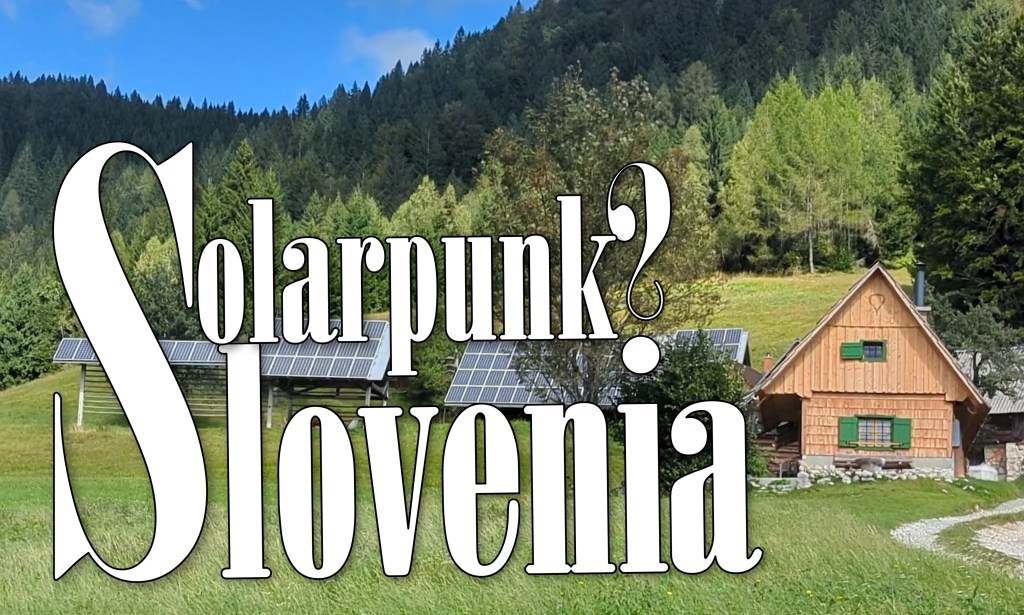
So I recently wove my way, by way of bicycle and electric train, through a place near and dear to my heart. It is a place with ‘love’ both in the names of the country and its capital city, whose unassuming global presence has again a touch point in our very own white house:
Slovenia.
(if you haven’t yet, now’s
a good time for the video)
Alas, let us not think Slovenia is our ideal beacon. As my friend Zala Primc—a Slovenian energy campaigner, activist, artist, and deeply thoughtful person—pointed out to me in a recent conversation:
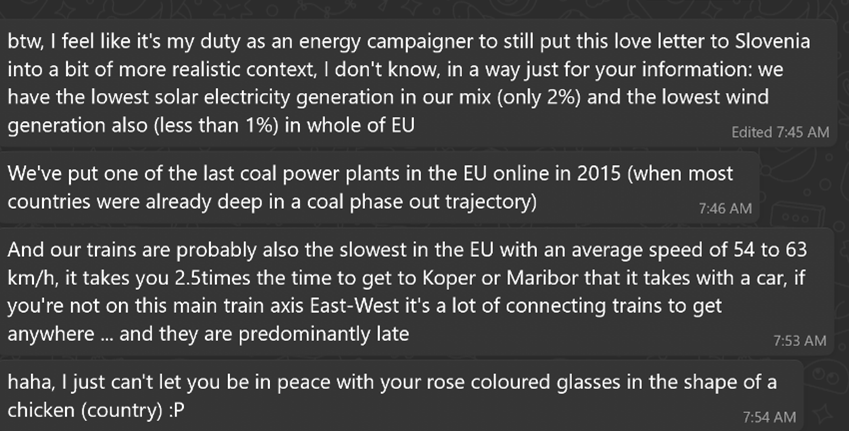
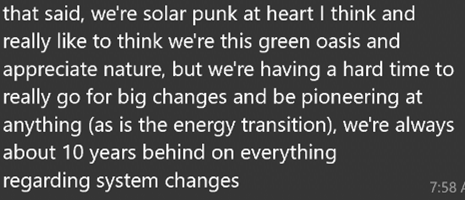
Good to have friends who keep your feet on the ground, while the head is in the clouds!
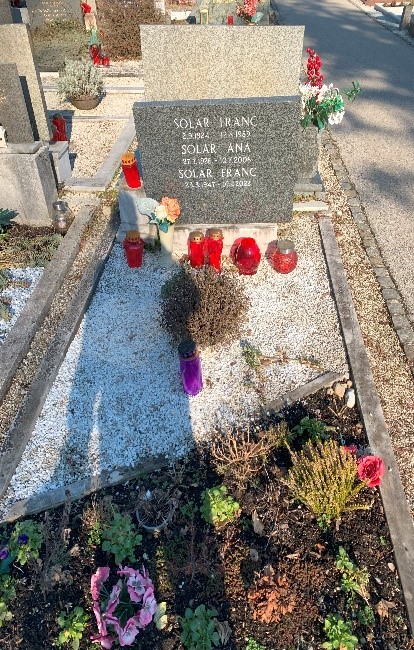
Pictured right: Seen on a recent stroll through a cemetery near Zala, a local family with Solar literally in the name.
This discord is real. And it is not just in Slovenia—it can be found anywhere. The reality of today’s energy systems is often far from the narratives we tell ourselves. But a solarpunk vision doesn’t require perfection. It requires effort, adaptation, and a willingness to dream beyond collapse.
Tell me: what stories are woven within your own community? From where do you draw inspiration, and into what are you committing some of yourself? I’d love to hear more, and thanks for stopping by!

 Two-Wheelin' Revealin'
Leave a reply to Howard Sharfstein Cancel reply