For three days last November, I was able to pedal along the Po, one of the most important rivers in Italy, on a journey with Systemic Cycles, an exploratory subsidiary of the MonViso Institute.
This is but one story from those days among poplar groves, regenerative rice fields, and communities between, which left me inspired, conscious of blind spots, and seeing a (winding) path toward understanding and working within bioregional systems.
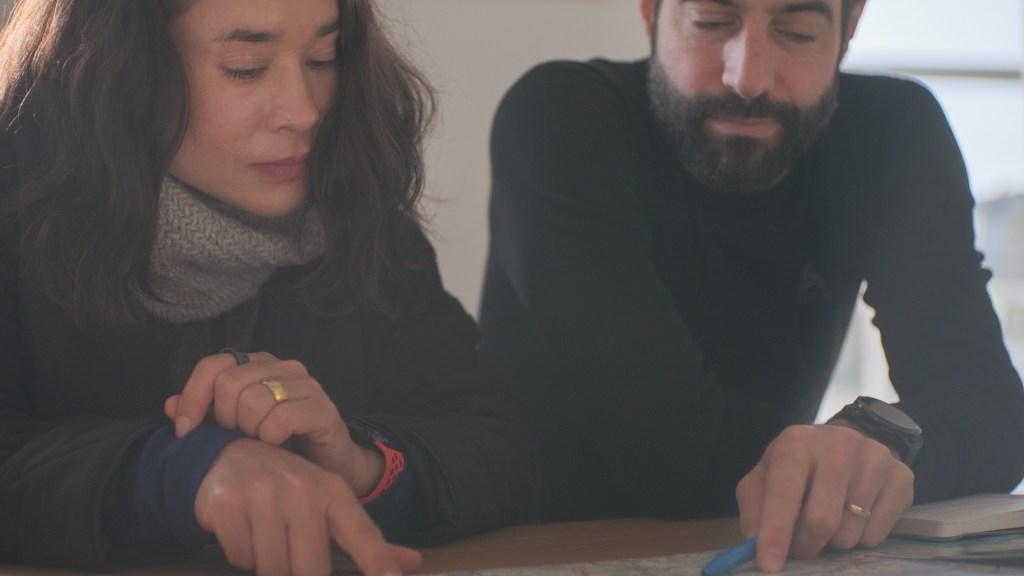
“How do you feel, knowing of concrete’s major climate impacts?” Tobias asks of Maria, who’s met to discuss their half-decade project of converting (and rehabilitating) a former concrete plant into a tourism hub in a seldom-visited nook of northern Italy. Light streams through the windows in discrete beams, illuminating the industrial design of tastefully curated art adorning walls of smooth, sharp, or flowing forms of concrete.
“Of course there is impact,” she replies, tastefully dressed in blacks and grays, a wool scarf proxy to the forms of stone which have been the livelihood of her family, and community of Casale Monferrato, for decades. “But I don’t see the problem with the material, but in the mindset. The use of anything out of control is the problem…to me, this is taking the stone of the earth and shaping it in new forms. Is it so bad to connect the places we want to go? It could be worse, like asphalt.”
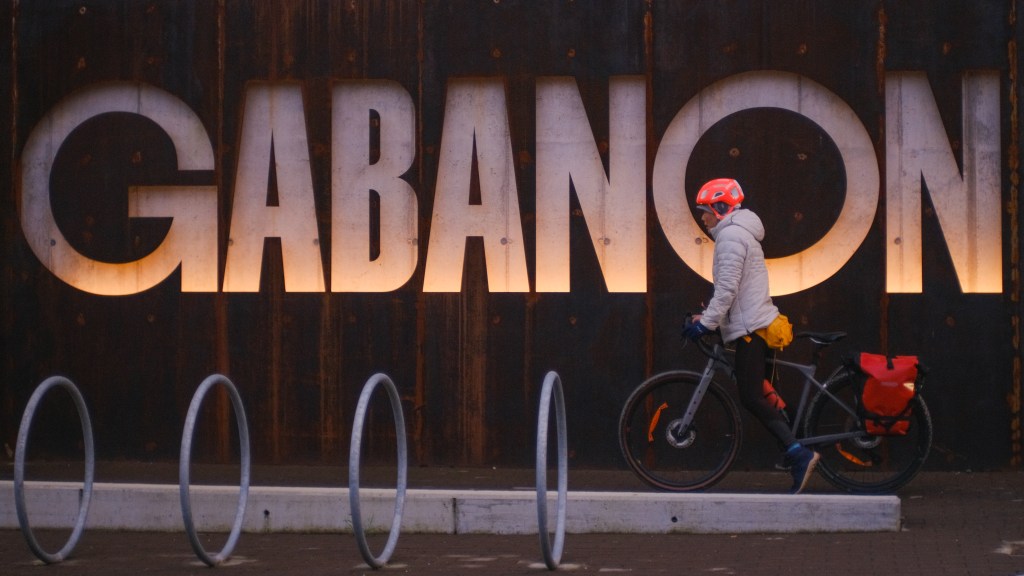
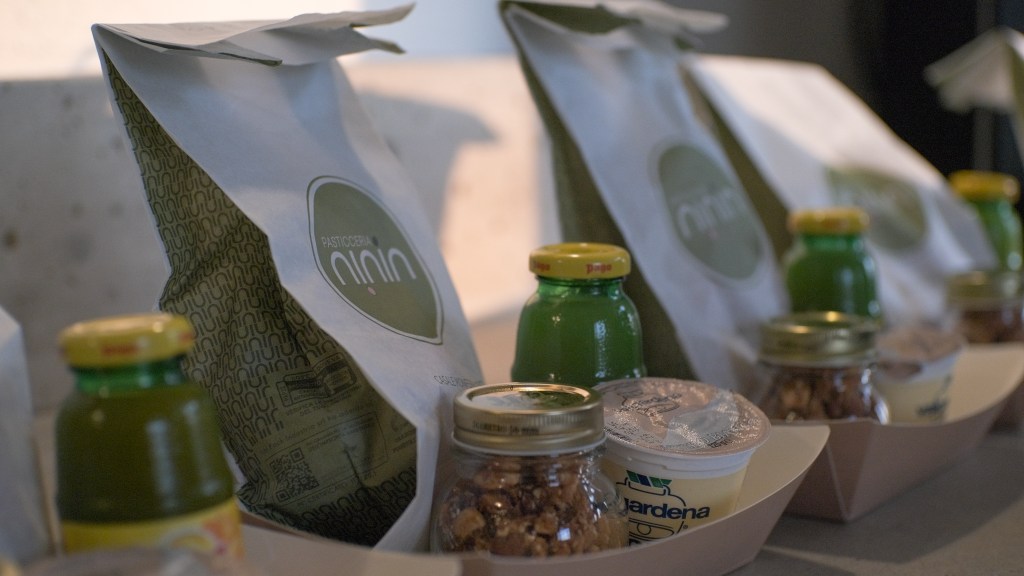
We sipped tea and coffee, ate pastries from a local bakery, and spoke of the details around Gabanon, a newly opened hostel which aims to serve inregenerazia urbana, bringing vital economic activity through tourism to a place originally defined by fire, noise, industry. It is a breath of life into the bones left behind, a chance at something new.

Is it self-congratulatory to build such a project with money from an industry causing so much damage, though?
We toured the grounds, past metal structures now standing as lines against the Piedmontese morning sky. A hostel in its practical form, an art museum in aesthetic.
Thoughtful craftsmanship abounds, and a connection to and appreciation of the material is evident, in texture, shape, and color.
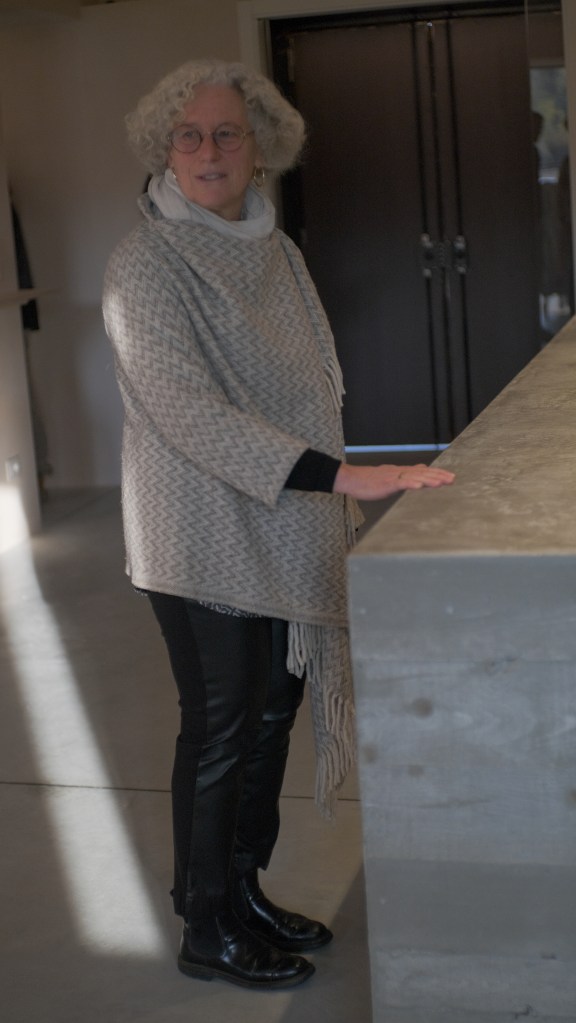

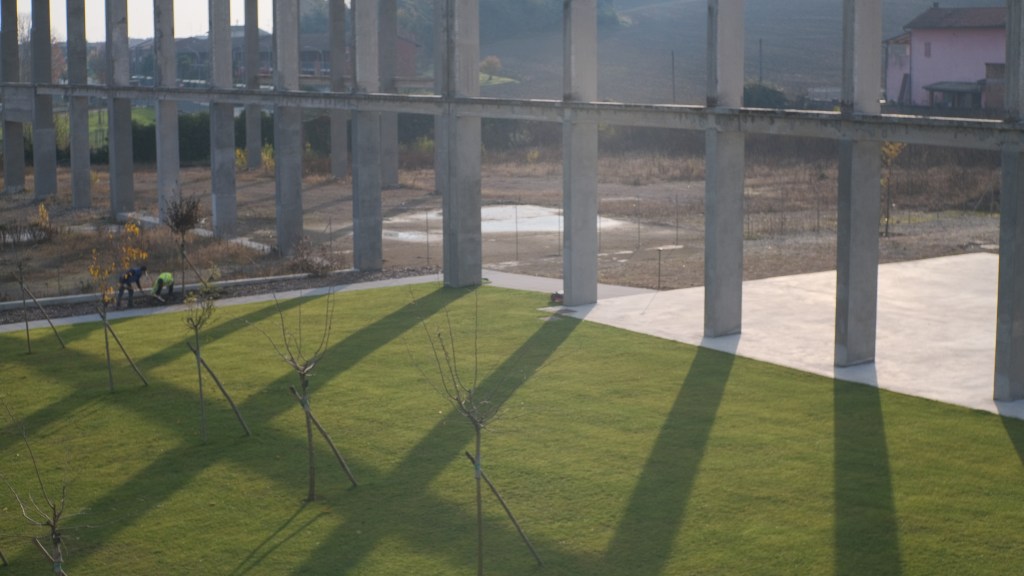
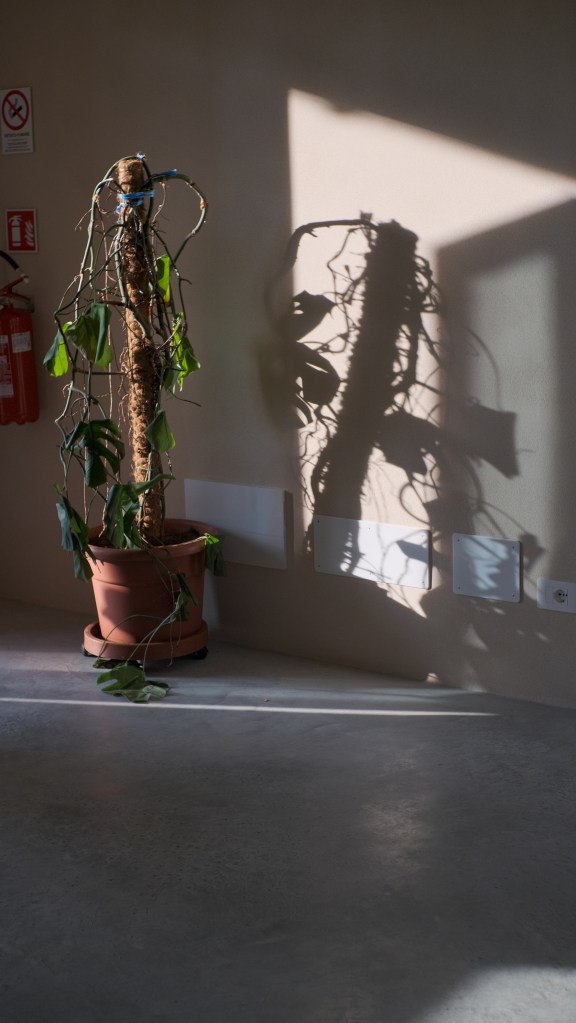
[“We haven’t found a place yet where it is happy.”]
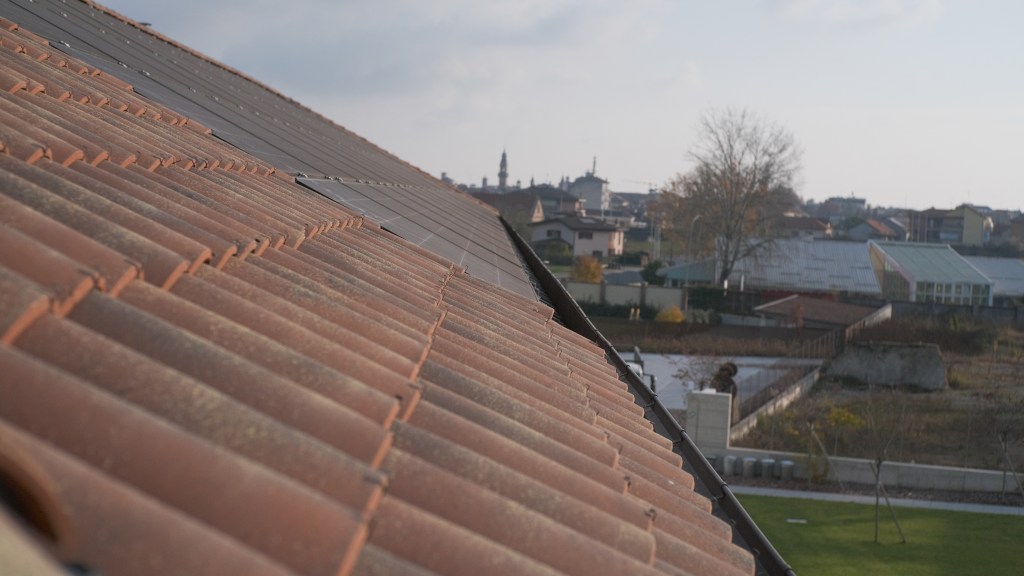
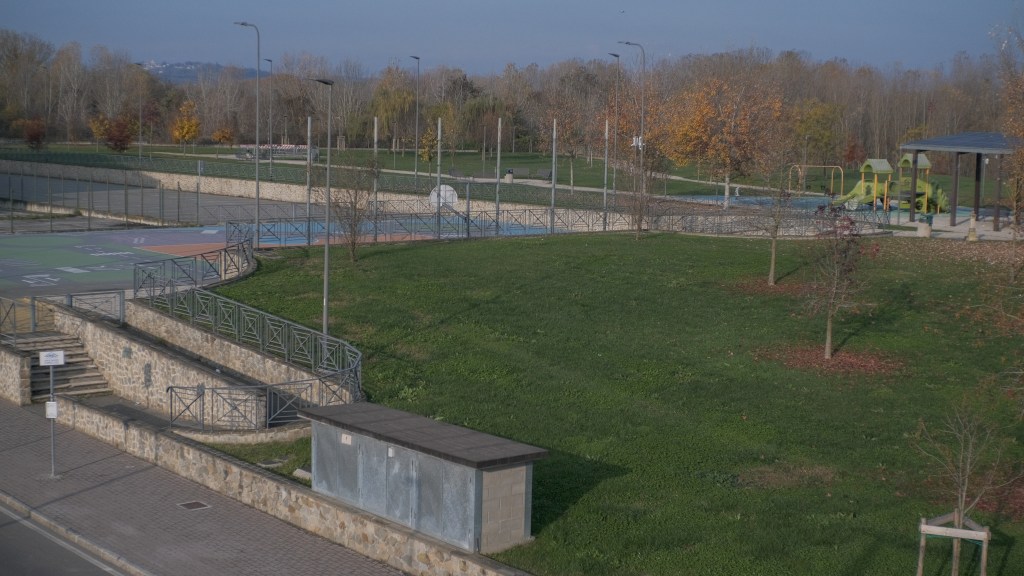
We stand on the rooftop deck overlooking the park, where Thomas and Maria share their vision for Gabanon, the bright colors of playground equipment contrasting the site’s former industrial grays. The tidy, green park was once the site of dozens of massive furnaces, holding fires so powerful a cement plant operator I met last summer related that to look into one is to look into the eye of Hell. These were ever cooking material from the hillside in the distance, whose unearthing meant the town on the slope across had to at one point entirely relocate to be where we see it today, due to the subsidence of the land upon which it originally sat.
“We had to pay for environmental remediation, and for infrastructure improvements. We will never make up this investment, but we saw it as a way to bring opportunity to two young families in the community.”
Thomas, the partner of one of the family’s daughters, helped acquaint us with the place, receiving us upon our arrival and showing us to our rooms and through our breakfast options, before guiding us on a tour of the grounds with Maria.
The conversation with Thomas and Maria continued from our perch as we shifted our attention from the park to the hostel grounds and the community-accessible padel court just below. They were open to our inquiries and ideas, curious about the perspectives we brought from universities and organizations around the world, from the Pacific Northwest to Tasmania and between. Ideas of community gardens, climbing walls, camping, and other regional weavings filled the space between us.
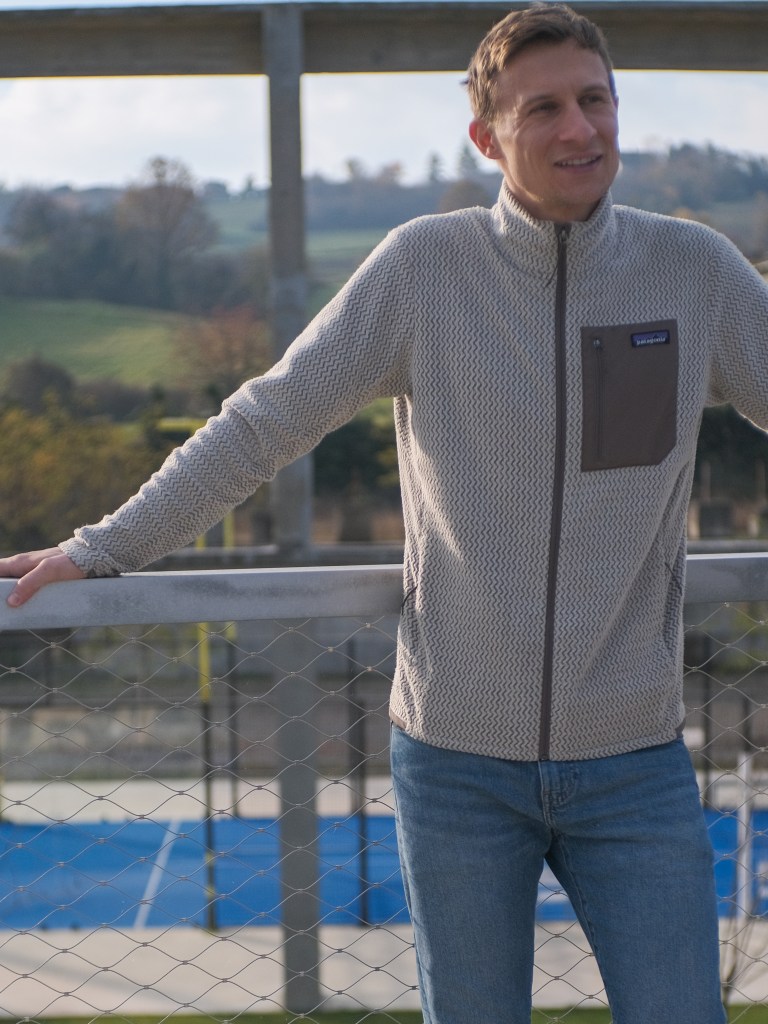
Thomas Krezel, of Gabanon, shares their vision for the former industrial site from the rooftop terrace.
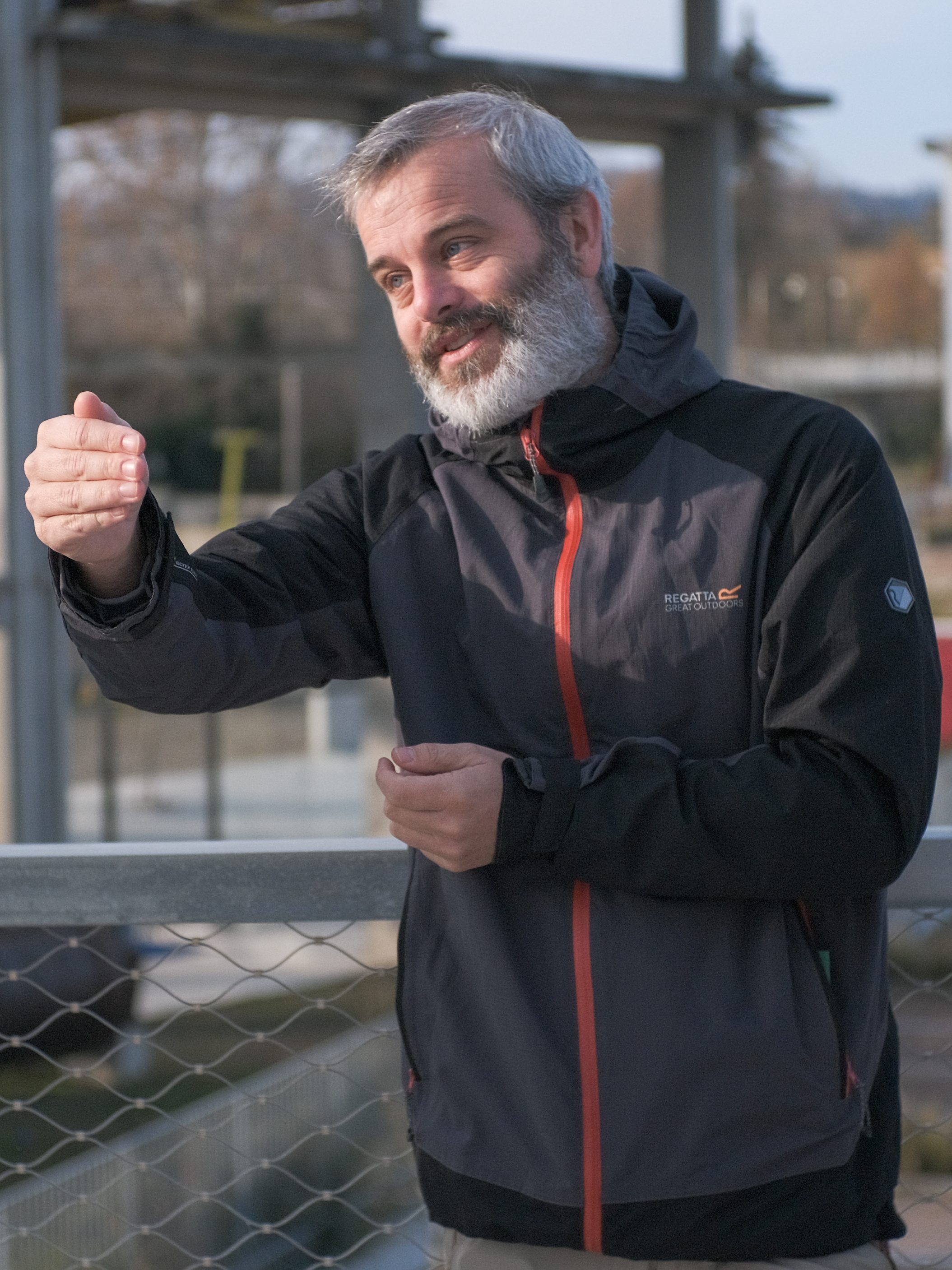
Folef Graafland, one of the facilitators of the MonViso Institute’s Systemic Cycles journey, brings experience in shaping tourism and experience from his home on the Venetian Lagoon.
Only minutes before our departure did Thomas and I realize we were already woven together through our work with a shared travel company, Backroads, and it was then that I really began to sense the kind of possibility being pursued with Gabanon. For a decade, my own work with Backroads had trained me to see interconnected tourism systems, routes shaped by logistics, pacing, lodging, and the quality of experience they could sustain. Standing here with Thomas, and realizing we carried that same background, gave me a more grounded sense of what Gabanon might become, not as an idea, but as a node for regional exploration. A point not only to preserve the past, which is indeed part of the hostel’s mission, but in crafting a path forward through what has been left behind.
“We’ve mapped over a 1000 kilometers of bike routes in the area already,” Thomas says, blue eyes glinting in the bright November sun. “You all are some of the first guests here,” he tells me, alongside the sense of possibility of what this place can be.
Adventure hub, regional exploration springboard, insight to the past, lever for the future. In ecology, a nurse log is a mature tree that has fallen, providing foundation and nutrients for abundant life to grow upward from the forest floor. Though this log is made of concrete, it is clear that a budding future will take the continued hands of Maria, Thomas, and their family, as well as the community in which Gabanon is set. And with such a foundation in place, it will also take those willing to arrive not just to see, but to support its stewardship and help new life take root.
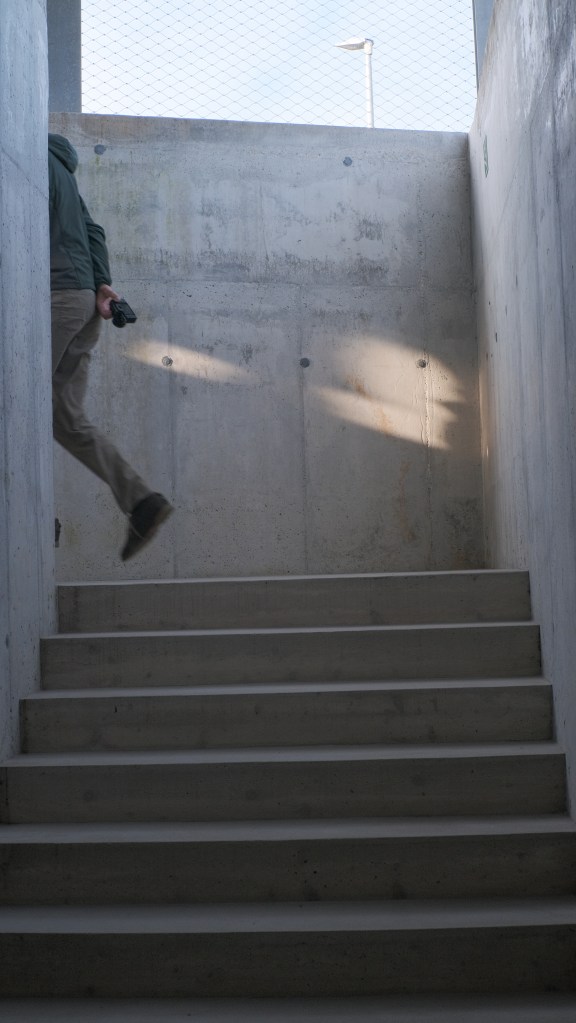
To learn more about Gabanon, check it out here.
 Two-Wheelin' Revealin'
Leave a comment