When I travel, if a place is atop a where-to-go list, I often take some pride, if a bit smugly, in avoiding it.
In fact, the allure to visit is typically still there for me; I mean, clichés rise up for a reason. But the throngs, the feeling of conveyor belt experiences, the checklist nature of it all can reduce a wonder to a quip at a party told to impress others and further confirm to yourself what an intrepid spirit you are.
I’ve been there. Many times.
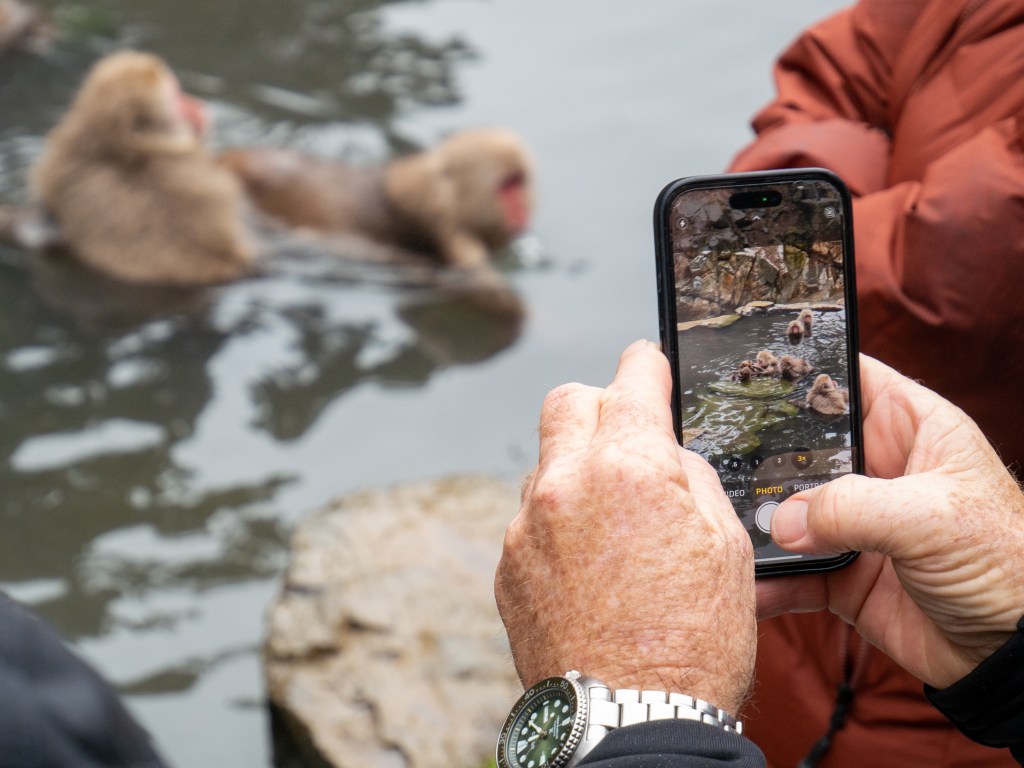
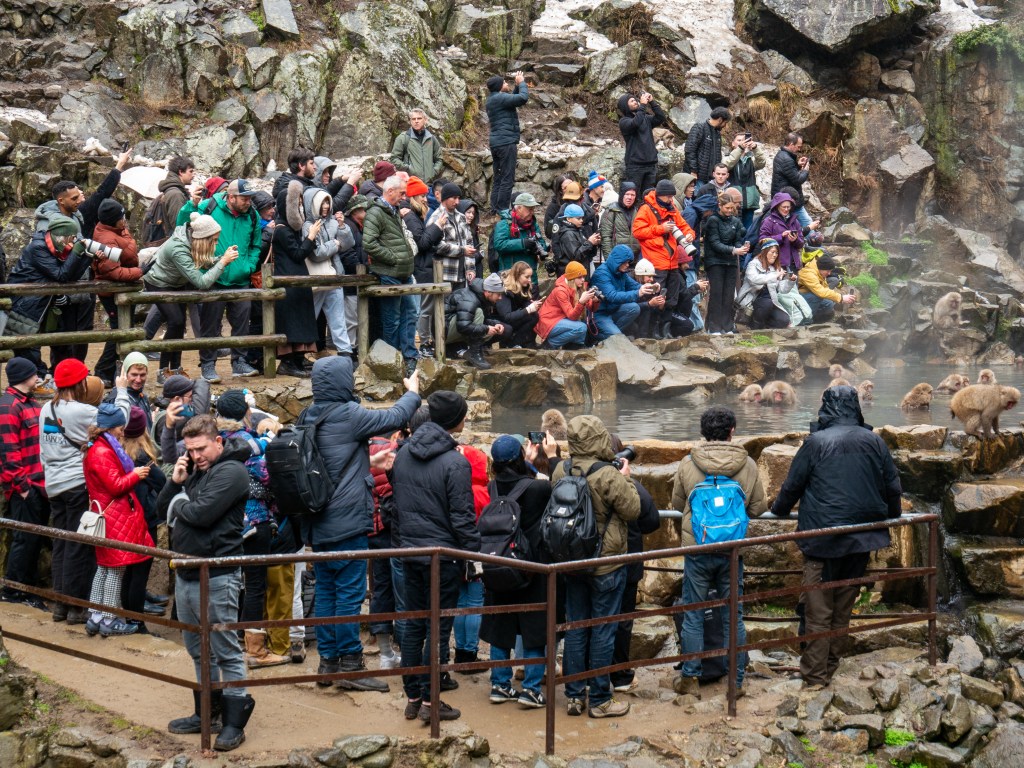
So I do still occasionally make my way to the Travel Advisor #1s, and on a rainy February day, I found myself with my close kindred spirits, and those of hundreds of others, to watch some primates take a bath, at the Jigodukani Monkey Park, near Nagano.
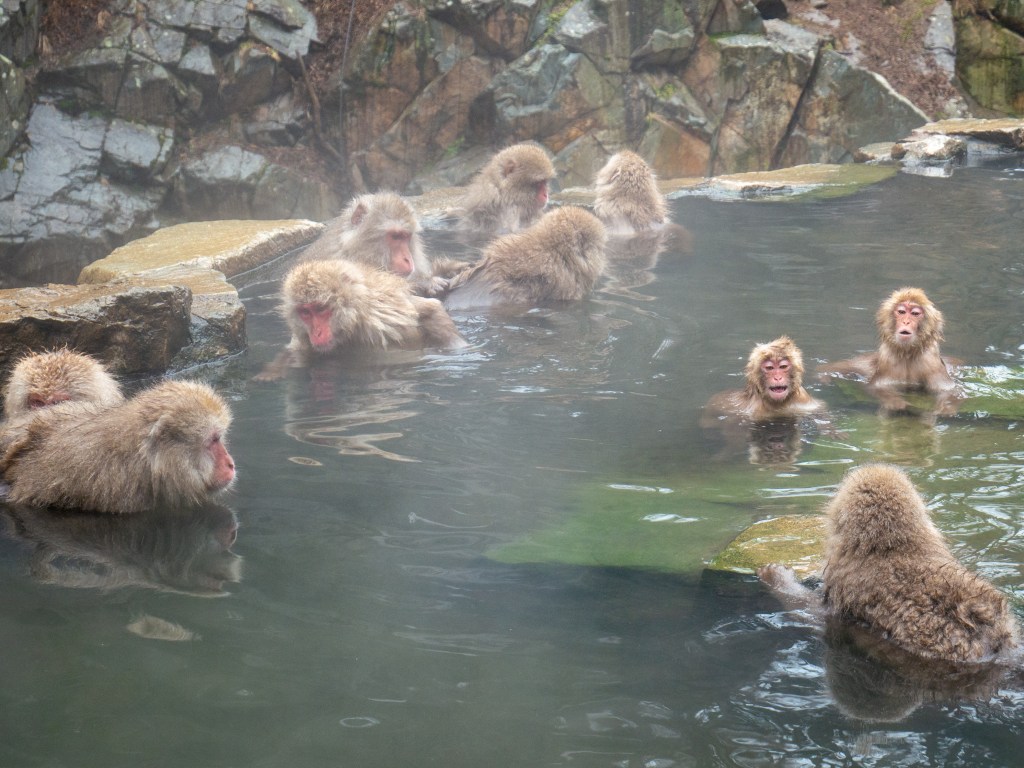
These are monkeys hanging out in hot springs deep within a snowy, Japanese canyon–hell yeah, what’s not to like?
And therein lies the trouble.
Tocqueville posited that the reward of travel is predicated on novelty, so we seek out the new, the unique, the things upon which stories are built.
So as I take in the wonder, I look around and must relinquish my self-identity as an off the beaten path traveler and admit that, I too, am part of the conga line.
“Take your ticket, please, and exit through the gift shop.”
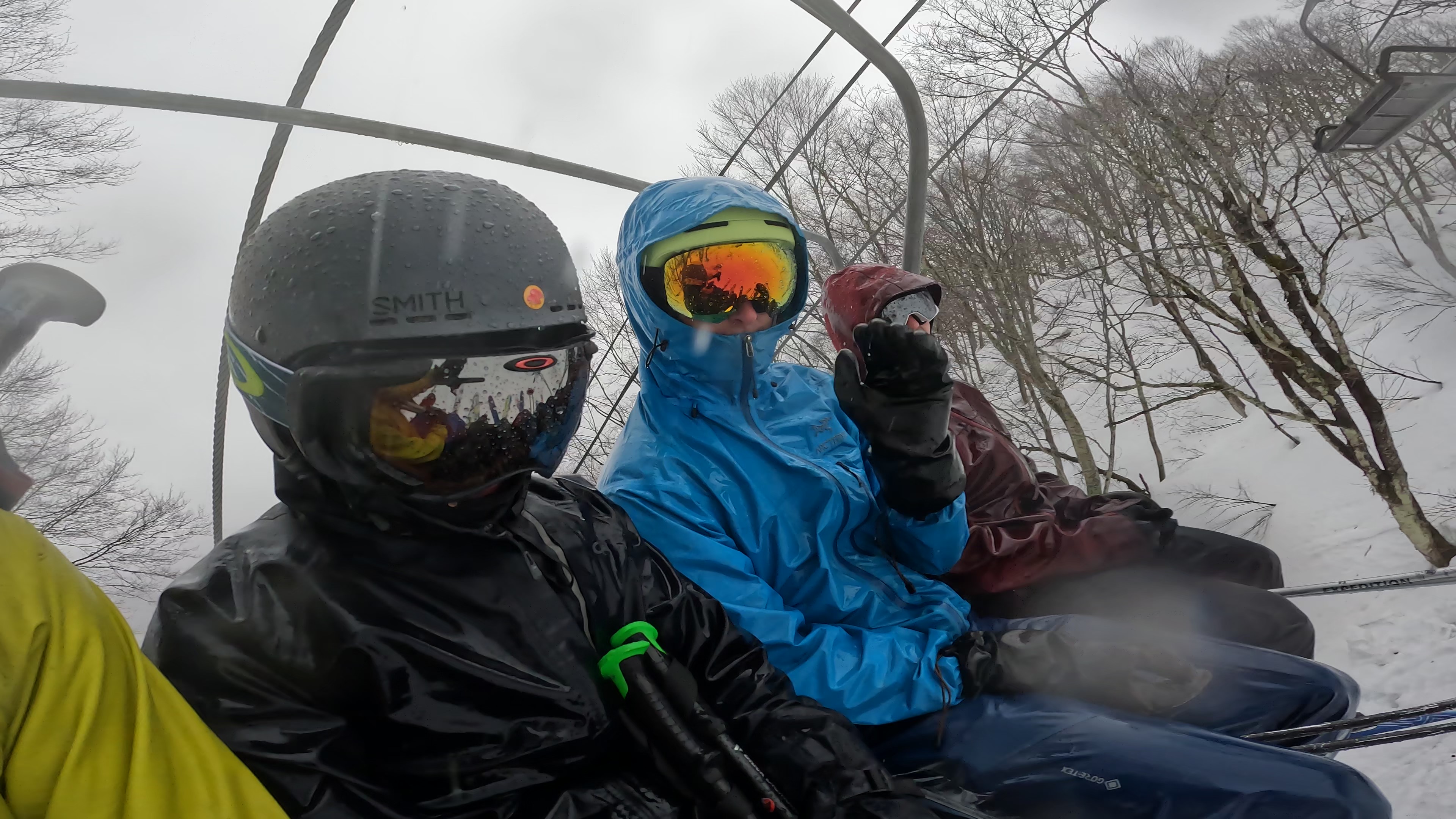
But the mental leap of comparison doesn’t stop at my fellow (hu)man. For what had we done in our own time in Japan, preceding? We played in the snow on the various slopes from Hokkaido to Hakuba (A Japan(skis) Whirlwind) and soaked in the sublime and ubiquitously available onsen bathhouses.
These monkeys are thus aspirational! To keep those tickets and hats and underwear selling, they are given food so they don’t need to search the rocky hillsides for calories, which would take away time from caterwauling and grooming each other and snoozing in warmth, ever on the receiving (or giving?) end of untold sums of lenses.
A little voyeurism is a price many of us would pay to revel in the material comforts, if Instagram is of any indication.
So as we slide down hillsides on planks of wood and soak in other hot water pools,
isn’t it clear that we, too, are just a buncha monkeys in the snow?
We want sustenance.
Place of warm companionship.
We need time to be.
And yet, when these needs are met, we find a further craving, for that of novelty.
So we jet around, voraciously consuming snow monkeys and natural wonders and man-made monuments, to stake our claim in it before the rest of the world knows. I find the irony so striking in how our pursuits hasten the degradation of these treasures. The famed Ja-Pow we hoped would replace the literal mud at our home slopes of Mt. Baker was much the same, far more liquid than fluff.
Perhaps we’re all monkeys in the snow, but our subset has played much more a role in its systems, and our responsibility thus extends to meet our impact.

Japan, with nearly mythologized technological modernity and quality of life, has half the greenhouse gas emissions per person than citizens of the good ol’ USA (not a tough benchmark for comparison, mind you). A more thorough analysis for the “why” is best suited elsewhere, but a couple things stood out to me in our brief weeks there*. First a cultural belief of nature at the core of everything we experience, Shinto, is woven into the social fabric to a degree (we will conveniently side step the endless packaging, pursuit of aesthetic perfection, and ecological pitfalls of any modern society with this sweeping statement, for now). Additionally, as an island nation with fewer natural resources, there has been an inherent need for efficiency and well-developed systems. In public, I witnessed a level of respect for others, places, and things as simply a fact of life.
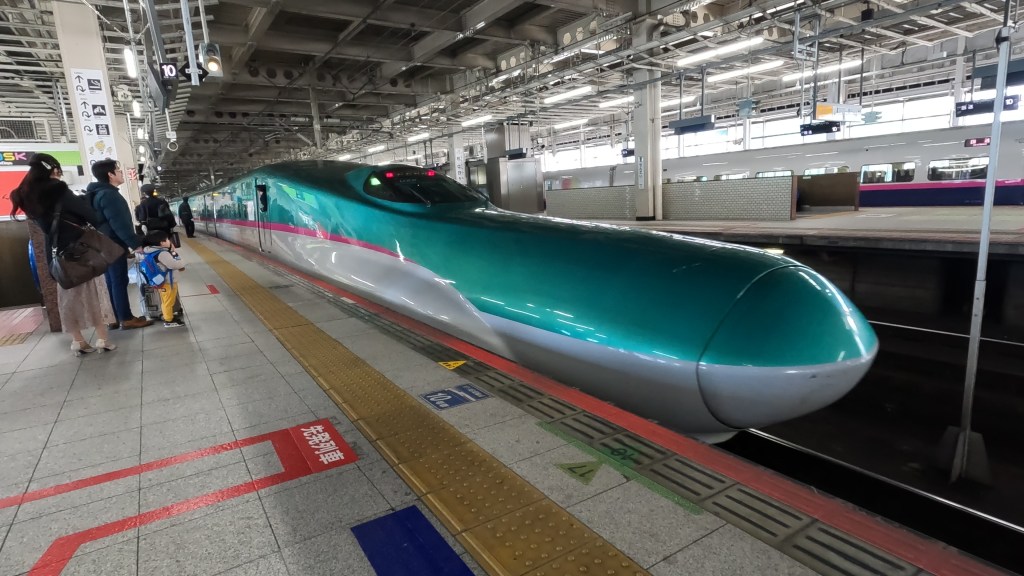
And so, genuinely inspiring systems of social infrastructure and engineering have been developed from public transit (be still, my heart, at the integration of the bullet Shinkansen into the ever-available and inexpensive subway) to getting water piped to millions in a relatively confined place (do visit the Tokyo waterworks museum https://www.suidorekishi.jp/en/, if you get a chance). Of course, such works leave plenty of room for improvement, but they are still notable for how societies can be shaped to be closer to staying with environmental bounds.
*To be clear, this is not an in-depth take on Japanese custom and culture, simply some observations harmonized with an honest attempt at getting insight into a place that has more depth and nuance than I will ever be able to comprehend.
I don’t know how we integrate the consideration of nature at the hub of how we operate, not simply as an extractive spoke of doing business. I do firmly believe that the privilege of bearing witness to, and being, monkeys in the snow comes with a duty to protect. A possibly troubling part of considering the future for yet-to-arrive generations is the idea that we, in fact, will not be of those generations. The universe has conspired for our fragile and fantastical existence, and though tomorrow eventually will not come for us as individuals, what we weave together now will be to our shared strength.
We exist. By virtue of the physical laws of entropy, we have impact.
Personally, I’m trying to move past the paradigm of simple impact mitigation, as so often characterizes our ecological efforts (consider net-zero, carbon neutral, even conservation, generally speaking). With this approach, the best-case scenario is we cause no damage, by not existing—a course of action I’m not personally a fan of. A new friend, Francisco Laso (https://cenv.wwu.edu/people/francisco-laso), eloquently stated to me how his MO is not simply to reduce harm, but to frame his actions as tending a garden. In effect, can we re-frame our actions to bring about positive impacts, leveraged for multiplicative effect?
Instead of obsessing over examining the ground in the wake of our stomping toward the ever-elusive “more”, let’s find a way to plant gardens in the footprints we place intentionally, and with care.
I have loved travel for what it’s illuminated, where it has challenged, and the joys always around the corner—but there’s no such thing as a free lunch. Let us be honest with ourselves in our approaches, but also set the self-flagellation aside. Since we still are those monkeys, let us also leave room to enjoy the onsen, and the snow while we still have it.
 Two-Wheelin' Revealin'
Leave a comment